Black History Month

The Town of Collingwood recognizes February as Black History Month in Canada, a time to celebrate the contributions, leadership, and resilience of Black communities. First officially recognized in 1995 through the leadership of the Honourable Jean Augustine, this month invites residents to learn more about Collingwood’s Black history, explore the broader history of Black communities across Canada, and reflect on the important role Black history plays in shaping our shared past, present, and future.

As part of Black History Month, the Town of Collingwood is highlighting a range of initiatives, exhibits, and events that celebrate Black history while encouraging learning, reflection, and community connection.

Black History Month Event

Celebrating African Cuisine

Cooking Demonstration — Feb 25th

Black History Month Flag Raising- Tuesday, February 3rd

Gather with us as we raise the Black History Month flag in Collingwood. Standing together as one community, we recognize and celebrate Black heritage and hope. This flag raising honours the lasting contributions and reaffirms our shared commitments.
 

11:00 a.m. | Collingwood Public Library, Community Flag Pole, 55 Ste. Marie Street

Image
Community, Diversity, and Unity Signs

Community, Diversity & Unity Signs- Downtown Collingwood- All February

To further commemorate Black History Month, signage will be mounted to the light standards downtown Collingwood on Hurontario Street between Second & Third Street.

Community Initiatives

Black History Month Storyboards

In honour of Collingwood’s rich Black history, we invite you to take a journey back in time and explore stories of our past through storytelling. These storyboards share the history of Black community leaders and changemakers, documenting and illuminating the journeys, accomplishments, and challenges of Black settlers in Collingwood.

The storyboard project was made possible through the contributions of the Sheffield Park Black History and Cultural Museum, the Collingwood Museum, and members of the community.

The storyboards are located at Town Hall & Business Development Centre windows (97 & 105 Hurontario St) and Collingwood Museum (45 St. Paul St)

You can also view the Black History Month storyboards by clicking on the storyboards below.

Collingwood’s Black History Month flag.

Black History Month Storyboards

In 1995, Parliament officially declared February as Black History Month in Canada, recognizing the vital contributions of Black communities to the nation’s history and development. This storyboard series invites visitors to explore the rich and often overlooked stories of Collingwood’s early Black settlers, made possible through community partnerships, historical research, and shared memories preserved by local museums and cultural organizations.

Download Storyboard Transcript

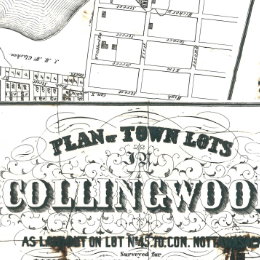
Historic 1856 map showing Collingwood and surrounding settlements

Collingwood – A Stop on the Underground Railroad

Collingwood became one of the final destinations on the Underground Railroad after slavery was abolished in the British Empire in 1834. Freedom seekers arrived by foot, wagon, and ship, drawn by opportunities for work and land ownership. Despite discrimination and hardship, Black settlers established rural communities across the region before many moved into growing towns like Collingwood.

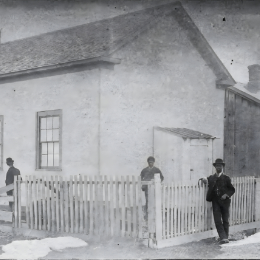
Historic photograph of early Black settlement area in Collingwood

Collingwood’s Early Black Settlements

In the 1860s, early Black families formed a settlement near present-day Central Park, creating safety and community despite isolation and limited opportunity. Later, families built homes between Sixth and Eighth Streets, Oak and Cedar. The Little Chapel, opened in 1871, became the centre of spiritual and social life, anchoring a neighbourhood that fostered belonging, resilience, and shared culture.

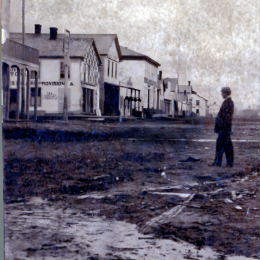
Historic map and illustration of Collingwood streets in the 1860s

Elijah Piecraft – Collingwood's First Town Crier

Born into slavery in the United States, Elijah Piecraft escaped through the Underground Railroad and settled in Collingwood with his family. A skilled fiddler and respected church member, he became Collingwood’s first Town Crier, ringing his bell through the streets to announce events and news. His contributions were formally recognized in 2003 by provincial heritage organizations.

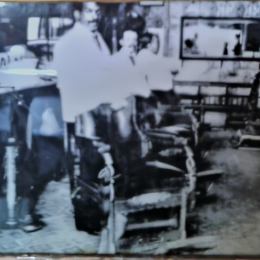
Portrait photographs of Pleasant and Charles Duval, early Collingwood barbers

Pleasant & Charles Duval – Collingwood's Early Barbers

Arriving in Collingwood in 1855, Pleasant Duval opened one of the town’s first barbershops, later expanding into ice cream service and employing both Black and White barbers. His son Charles continued the business for six decades. For nearly a century, the Duval barbershop served generations of residents, becoming one of Collingwood’s longest-running and most respected early businesses.

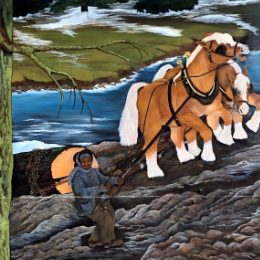
Public art panel depicting Black pioneers logging along the Nottawasaga River

Logging on the Nottawasaga

This public art panel tells the story of the Cooper family, early Black pioneers who settled near Collingwood in 1854. Through symbolic imagery, artist Janie Cooper Wilson honours seven generations of her family, highlighting logging, land stewardship, and entrepreneurship. The work celebrates both family history and the broader role of Black settlers in shaping the region’s landscape and economy.

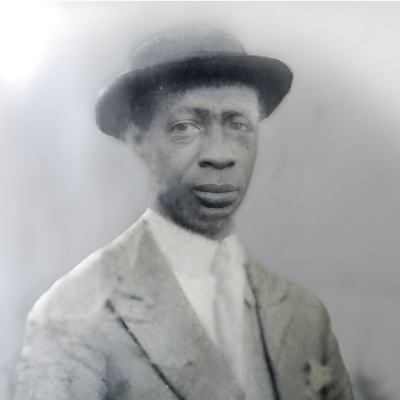
Portrait of Joseph Quinn Thomas, community leader and church musician

Joseph Quinn Thomas – Community Leader

Born in the Oro Settlement, Joseph Thomas worked at the Collingwood Shipyards for fifty years while serving as organist, choir director, and church leader. He held national leadership roles within the BME Church and helped unite communities through music, faith, and service. His legacy endures through the church he served and the instrument he once played.

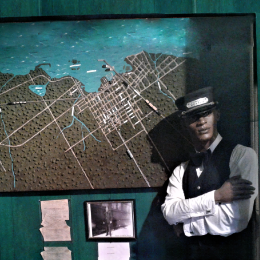
A porter in uniform overlooking Collingwood's railway and harbour system

Black Men in Business & Service

As Collingwood grew, Black men built livelihoods as sailors, dock workers, railroad porters, tradesmen, and entrepreneurs. Travel along ports and railways connected communities, strengthening networks of support. Families such as the Coopers, Sheffields, Duvals, and Davenports established businesses and trades that contributed significantly to the town’s economy and helped lay foundations for future generations.

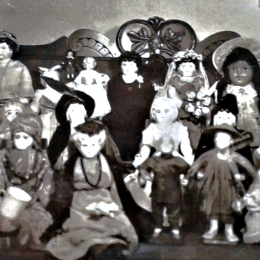
Handmade dolls and clothing, courtesy of Sheffield Park Black History and Cultural Museum

Black Women in Business & Service

Black women sustained both families and communities through work as cooks, dressmakers, caregivers, hairdressers, and entrepreneurs. Many operated home-based businesses, practiced herbal medicine, and provided essential services. Leaders such as Caroline Piecraft, Emma Green-Lewis, and Susan Brown-LeBurtis became respected healers, mentors, and role models, shaping community life through resilience, skill, and leadership.

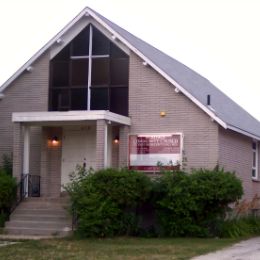
Heritage Community Church, courtesy of Heritage Community Church of Collingwood, Inc.

Beginnings of Heritage Community Church

The church was the spiritual and social heart of Collingwood’s Black community. Built in 1871 as the Little Chapel, it anchored worship, education, and identity for generations. Through rebuilding and transformation, it became Heritage Community Church in 1986. Still standing on its original site, the church remains a living symbol of faith, continuity, and cultural heritage.

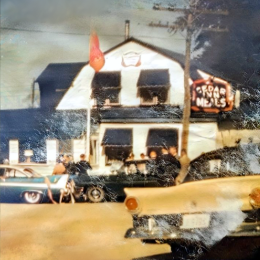
Cedar Inn Restaurant, courtesy of Sheffield Park Black History and Cultural Museum

Cedar Inn Restaurant

After decades cooking aboard Great Lakes ships, Wilfred and Ildia Sheffield opened the Cedar Inn Restaurant in 1945. During segregation, it became a rare safe dining place for African American travellers. The restaurant operated for 26 years until road construction forced its closure. Today, its legacy lives on through preserved artifacts and stories shared at Sheffield Park Museum.

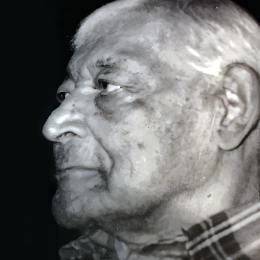
J.J. Cooper, courtesy of Janie Cooper-Wilson

J.J. Cooper Park – By Brenda Miller

This poetic tribute honours J.J. Cooper, whose farm once occupied this land and whose legacy lives on through the park that bears his name. Celebrating memory, nature, and play, the poem reflects on transformation, ancestry, and gentle stewardship. Today, the park serves families and children while quietly preserving the spirit of a respected community figure and his enduring connection to place.

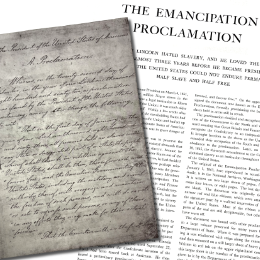
Emancipation Proclamation, courtesy of Sheffield Park Black History and Cultural Museum

Emancipation Day Celebrations

On August 1, 1834, slavery officially ended in the British Empire. For decades, Collingwood’s Black community marked Emancipation Day with parades, music, speeches, and gatherings that celebrated freedom and perseverance. While local traditions faded over time, regional celebrations continue today, especially in Owen Sound, honouring resilience, culture, and the ongoing legacy of emancipation.

Are you hosting a Black History Month Initiative?

The Town of Collingwood is proud to promote and support Black History Month programming and initiatives taking place in our community. If you are hosting an event, initiative, or program and would like it added to our events calendar & webpage, please email anorris@collingwood.ca